
Jillian McManis – Mustangs Ahead
(LAKEWOOD RANCH, FL)- Manatee School district School-based therapist Trisha Elston spends several days each week meeting with students to help them manage stress, anxiety, and other mental health challenges.
Although she works inside the school, she is not a district employee. She is contracted through Centerstone Hospital and Addiction Center to provide therapy services to students who attend Lakewood Ranch High School (LRHS) and Parrish Community High School (PCHS).
“So, my official role is a school-based therapist,” Elston said, “And I think in describing that, it’s important to know that I’m not a Manatee County school district employee. I actually work for Centerstone.”
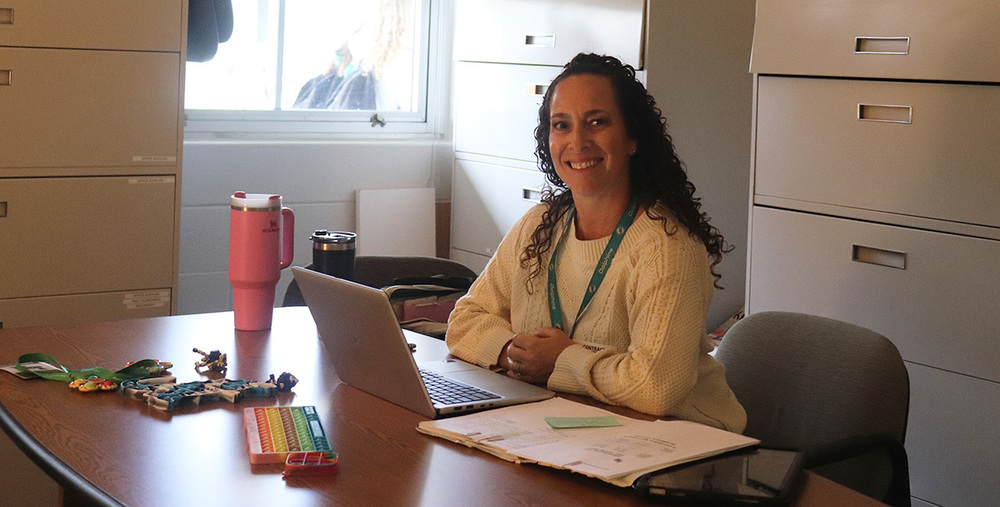
Elston’s workspace changes day to day, depending on the day and availability.
“I sit in this room, I’m here on Tuesdays and Fridays,” she said. “On Tuesdays, I have this room, but this is the social worker for the school’s room... on Fridays, I could be in the conference room or one of the guidance counselors’ rooms. So, I kind of wander.”
Despite the challenging location, her goal stays the same throughout, to provide students with a safe space where they can speak openly and learn ways to manage stress.
According to Elston, the most common issues students face today often center around anxiety, depression, and adjusting to everyday pressures.
Stay updated on more LRHS news by following us on Facebook, Instagram @mustangs_ahead, YouTube or follow the Mustangs Ahead Podcast on Spotify
“High school is a very stressful time,” she said. “What are we going to be when we grow up and that kind of stuff…testing, maybe some depression with the stresses of life or loneliness. Social media is a big one these days and constantly comparing.”
During a therapy session, Elston focuses on ways students can express their thoughts and learn new practical ways to cope.
“Talking is really good to get things out of your head,” she said. “And then coping skills. We talk a lot about coping skills and breathing and fact checking your mind and the thoughts that are going through there because we tend to lie to ourselves often. We are our worst enemies.”
Although students may also work with guidance counselors at school, Elston’s role is different. While counselors focus on academics and college preparation, her work centers entirely on mental health.
“A school counselor would know all of that good stuff about your PSATs and your SATs and all the different classes you need to graduate,” she said. “I know none of that... I am definitely just here to help with coping skills.”
Elston says building trust with students is one of the most important parts of her job. She works to create an environment where students feel safe sharing what they are going through.
“I like to tell jokes sometimes to keep it nice and light,” she said. “I definitely make it known that this is an unbiased and non-judgmental zone.”
For many students, having a therapist available during the school day makes getting help easier. Having classes, sports, jobs, and transportation challenges, finding time for therapy outside of school can be difficult.
“One of the main benefits of having a school-based therapist is that it saves time,” she said. “Not everybody has the availability for transportation or all those different things. So, this allows for a different population to be met.”
Ultimately, Elston says the most meaningful part of her job is helping students learn how to manage the uncertainty of the future.
“There’s so much pressure about the future,” she said. “I just find it meaningful to try to teach people to be mindful, the beauty of paying attention to the here and now and controlling the controllables.”
By teaching coping skills and offering a listening ear, Elston hopes students leave her office with tools they can use long after high school.
“You’re hoping to teach things that coping skills and ways of thinking that will make successful mental health humans in the future, she said. “The things you learn here can go with you throughout life.”